
Education in Turkey for Foreign Students
Turkish education system; It is an education system that interacts with the education systems of different countries, implements modern education methods and develops every year. Turkey accepts foreign students from all over the world every year with its quality and qualified educational institutions. Foreign students prefer to study in Turkey for reasons such as the increase in the quality of education every year, diplomas with international validity, economic and safe education opportunities and the conveniences provided to students.
Education in Turkey starts with pre-school education. Children who complete pre-school education are enrolled in the 12-year compulsory education system. After 4 years of primary school, 4 years of secondary school and 4 years of high school education, the 12-year compulsory education period is completed and children are entitled to receive a "High School diploma". The student who completes high school education can start university education by taking university exams and continue his education life. After undergraduate education, graduate and doctorate education can be taken optionally. In Turkey, 12-year compulsory education is provided free of charge in public schools. In addition, there are many private educational institutions that provide paid education.
Preschool Education in Turkey
Preschool education period is of great importance in shaping a child's personality, development and preparation for life as a healthy individual. A child's education begins in the family from the moment he is born. When the basic education given by the family is completed and the child reaches a certain age, the education continues at the school. There are private and state institutions in Turkey that provide pre-school education for all children between the ages of 0-6. Pre-school education is not compulsory in Turkey.
Preschool education institutions play an important role in the development of children's physical, emotional, scientific and social skills. These education children;

- It enables them to socialize and develop their social skills at an early age.
- Prepares for future education life.
- Develops self-expression skills.
- Makes them realize their talents.
- Makes you aware of your limits.
- It enables the development of skills.
“For foreign students who will enroll in the pre-school education system in Turkey, passport, student visa and a residence permit of at least 6 months are required. Children of foreign parents who have a residence permit in Turkey are not required to have a separate education visa during registration. There is no residence permit or study visa requirement for foreign students who have obtained Turkish citizenship.
12-Year Compulsory Education in Turkey
Students who have completed pre-school education in Turkey pass to the 12-year compulsory education system. Compulsory education in Turkey was increased from 8 to 12 years in 2012-2013. 12-year compulsory education system; It is organized as 4 years primary school, 4 years middle school and 4 years high school. In the new system, it is compulsory for all children who have completed 66 months to attend education.
- Primary School in Turkey
In the primary school education process, children are given basic reading and writing skills. Basic education is given in fields such as Turkish, mathematics, life sciences, science, social studies and foreign languages.

- Secondary School in Turkey
After 4 years of primary school education, 4 years of secondary school education begins. Secondary school is a period in which more detailed versions of the lessons given in primary school are given to students. The lessons seen in primary school are detailed and students are directed to the departments they will choose in high school by their teachers according to their abilities and skills.

- High School in Turkey
Students who complete 4 years of secondary school education pass to 4 years of high school education. In high schools, which are transferred with or without an exam, different trainings are given according to the fields. There are many science high schools, Anatolian high schools and vocational high schools in Turkey that provide high quality education. Students who successfully complete their 4-year high school education are entitled to receive a "High School Diploma".
“For foreign students who will enroll in the 12-year compulsory education system in Turkey, passport, education visa and a residence permit of at least 6 months are required. Children of foreign parents who have a residence permit in Turkey are not required to have a separate education visa during registration. There is no residence permit or study visa requirement for foreign students who have obtained Turkish citizenship. For the registration of foreign students to the school, some documents indicating equivalence are requested or the students are interviewed. Foreign students whose equivalence is determined after the interview are placed in the relevant schools and they are supported to learn Turkish.”

- University Education in Turkey
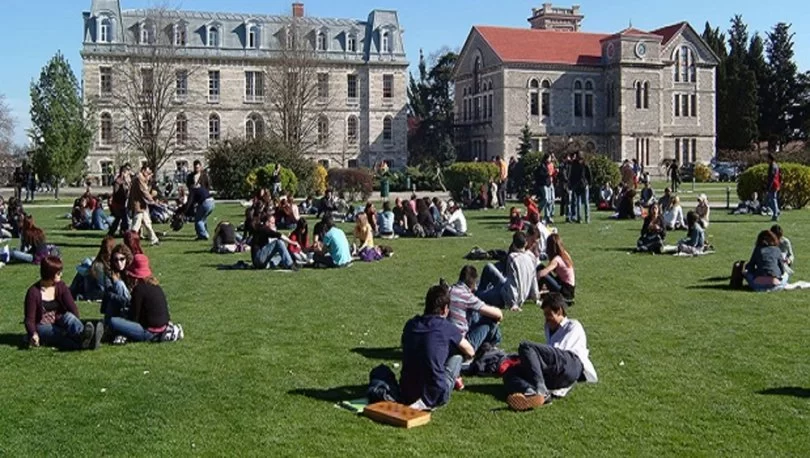
Students who want to continue their education life after 12 years of compulsory education can choose the department they want by taking the university exams. University education in Turkey is given as undergraduate (4 years) and associate degree (2 years).
There are many Turkish universities that are in important places in the world university rankings. In addition, undergraduate diplomas from Turkish universities are recognized by European countries and have international validity.
Foreign students who have completed their high school education in Turkey or who want to complete their university education in Turkey after completing their university education in another country have to take an exam before applying to university. Students who get sufficient points in this exam, which is called the Foreign Student Examination (YÖS), can enroll in a university of their choice in Turkey. The validity of YÖS is 2 years. This exam is held at universities. In other words, the student will take the exam organized by the university he/she wants to study and will be able to register and start his/her education according to the score he/she gets. Information such as exam information for foreign students, tuition fees and application conditions can be easily accessed on the official pages of universities.
The Foreign Student Exam is prepared in two languages, English and Turkish. In this exam, students' "Basic Learning Skills" and "Turkish" proficiency are tested. The basic learning skills test includes questions about areas such as mathematics, chemistry, physics, biology, geometry, geography and biology. In the Turkish proficiency test, the Turkish level of the student is measured. Students who do not get enough points in this test are taken to Turkish preparatory classes for one academic year and continue their education according to their success at the end of one year.
- Master in Turkey
There are many universities in Turkey that provide quality postgraduate education. Today, with the increase in the educated population and the number of people who have completed their undergraduate education, master's degree has become an important issue for competition in the business environment. Each university has different admission requirements for postgraduate education, which has an important place for professional competence. To learn about these conditions, you can learn the necessary conditions from the official website of the university you want to apply for.
The original or certified copy of the diploma is requested from the students who want to do a master's degree in Turkey. "Undergraduate Equivalence Certificate" is required for students who have completed their undergraduate education abroad. This document must be translated into Turkish and approved by the Turkish Ministry of Foreign Affairs. In addition, a Turkish translation and certified transcript showing all courses, credits and grades taken during the undergraduate education are required.