
Turkey's Mystery Full Of Secrets Mount Nemrut
Mount Nemrut has been the subject of Legends since ancient times, and today it is a supernatural place that attracts travelers interested in mountaineering, historical tourism, and nature exploration.
Mount Nemrut, located in Kahta District of Adıyaman province, is a 2.150 meters high mountain. Mount Nemrut is located approximately 87 kilometers from the city center of Adiyaman.
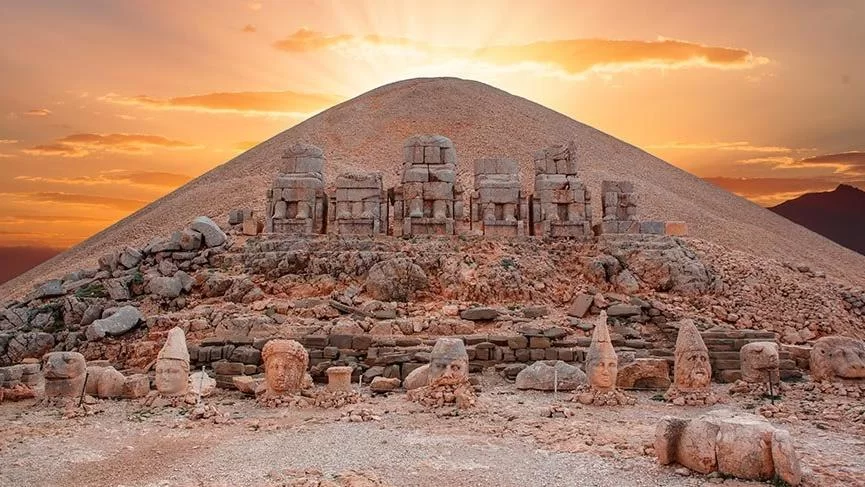
Features Of Mount Nemrut
• Nemrut is one of the volcanoes at risk of becoming active on Turkey's borders.
• Nemrut Crater, according to written sources, was last active in 1411 and 1441 and has the appearance of a caldera as a result of the big explosion that occurred 100 thousand years ago.
• Nemrut is both a natural monument and a historical monument shaped by human hands.
• Nemrut was declared a World Heritage Site by UNESCO in 1987 and it is protected by Nemrut Mountain National Park, which was established in 1988.
• Nemrut was equipped with huge statues filled with mystery by the Kingdom of Commagene in the 1st century BC. Mount Nemrut is also called “The Mountain of the Gods” because of the statues found here.
• The most interesting point of this mountain and his works on the mountain is that it is not known how huge sculptures were brought there with the technology of that time.
• One of the reasons that make Mount Nemrut mysterious is that there are many unexplored tunnels and lost graves here.
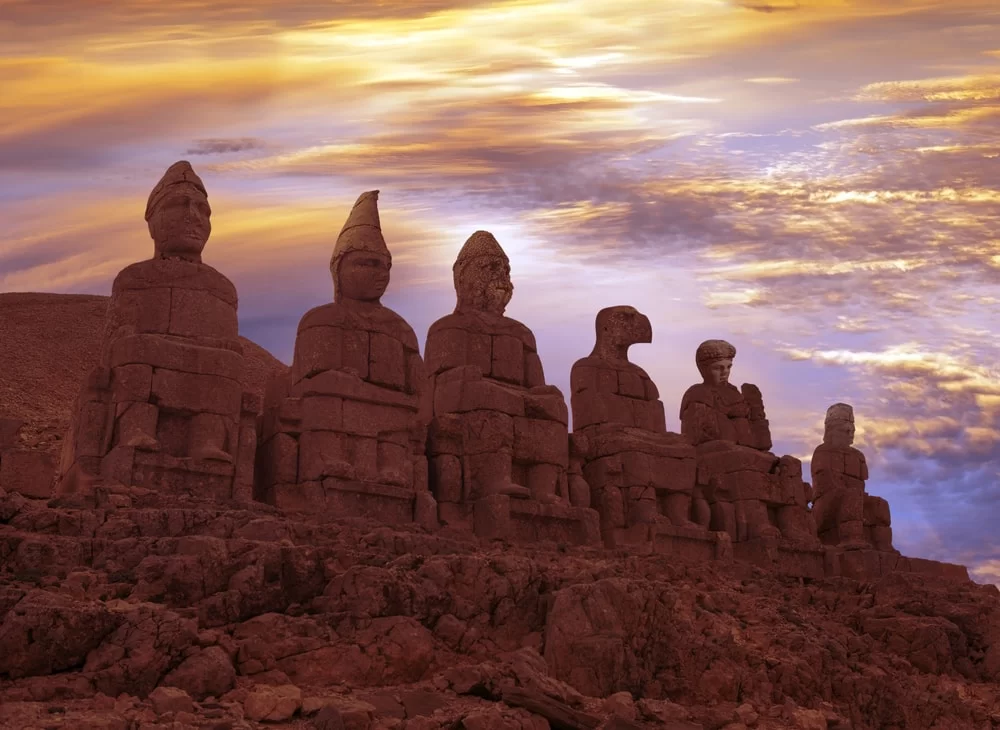
Mount Nemrut Statues
The Kingdom of Commagene, which dominated the region after the Persians and Greeks, was founded by Mithridates I. Callinicus in the 1st century BC and ruled here for 141 years. Many historical monuments on Mount Nemrut, which are the remains of this civilization, have managed to survive to this day.
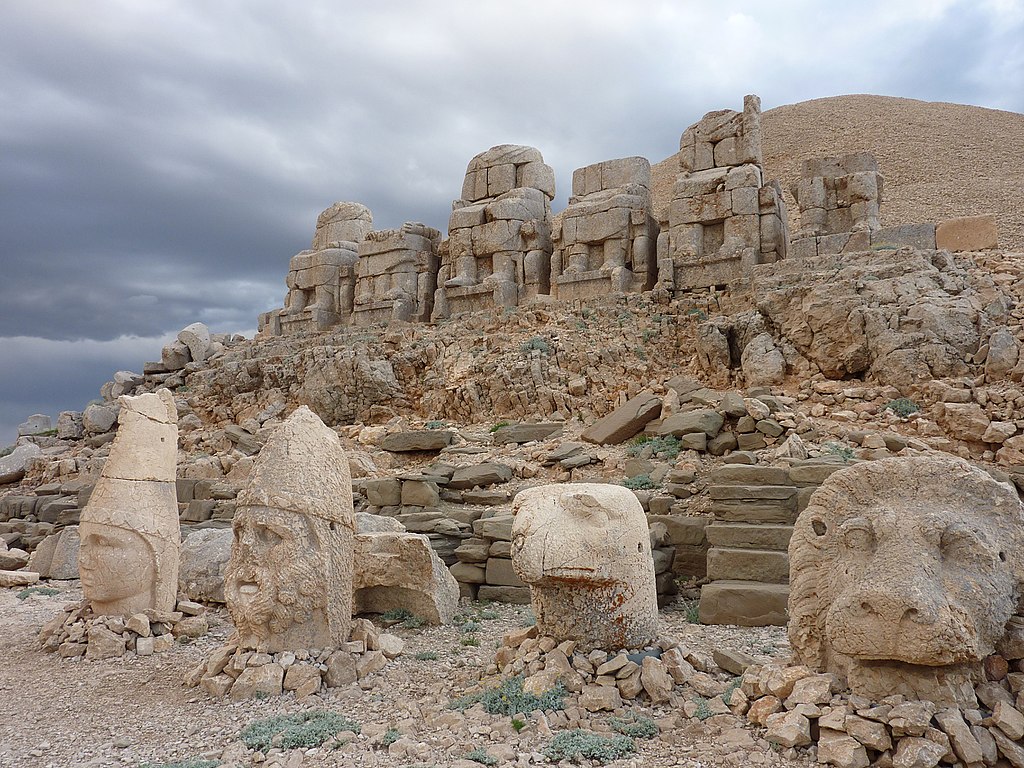
King Mithridates I. Callinicus wanted to expand the territory of his country both to the East and to the west. For this reason, he adopted both Persian and Greek culture and accepted the deities believed at the time, with both Greek and Persian names. The King's goal was to build a vast empire that encompassed both cultures.
Son Antiochus I Theos grew up with an education that included both cultures, and when he took the throne, he progressed through his father's vision. In 62 BC, in order to synthesize both Greek and Persian culture and to show his gratitude to the gods and ancestors, King Antiochus I Theos had giant statues placed on the top of Mount Nemrut, the size of which reached 10 meters. In addition to statues, the king built his own tomb-sanctuary on the mountain top.
There are statues of the god-goddess, as well as statues of the lion and Eagle on the eastern and western terraces of the mountain. A unique slab with a lion is located on the Western Terrace, and there are 3 stars consisting of 16 Rays on the lion. These stars are thought to represent the planets Mars, Mercury, and Jupiter.
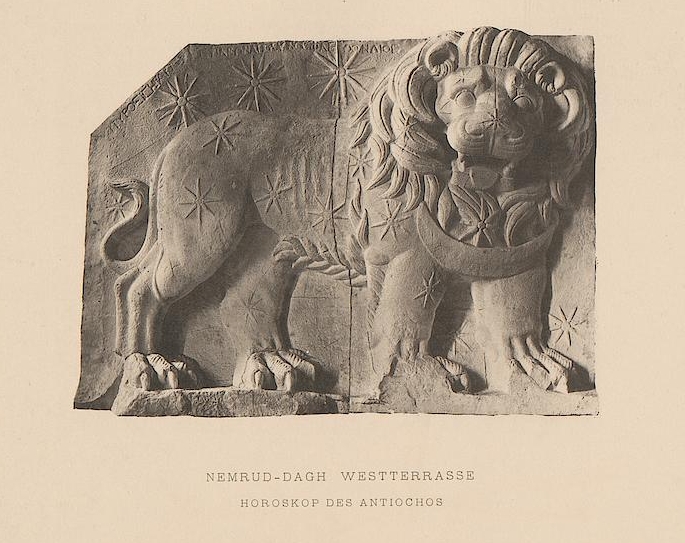
Each statue has the names of the god it represents and these statues represent the mythological god Apollo, Mitra, Helios, Hermes, Tyche-Fortuna, Zeus, Oramasdes, Antiochos, Heracles, and Ares, respectively.
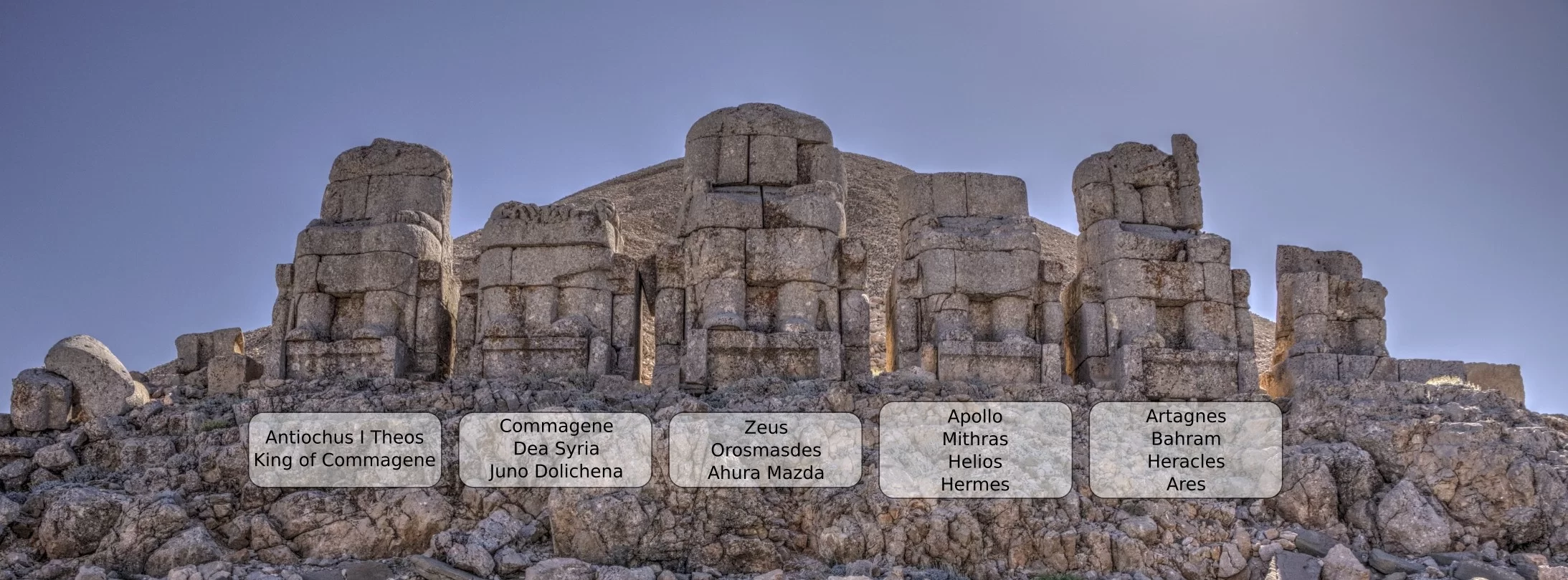
Inscriptions among the statues reveal that all the works on the mountain were made with the name of Antiochus I Theos, King of Commagene and he gives a lot of details about the sculptures. The inscription appears to have been prepared for future visitors and sheds light on history.
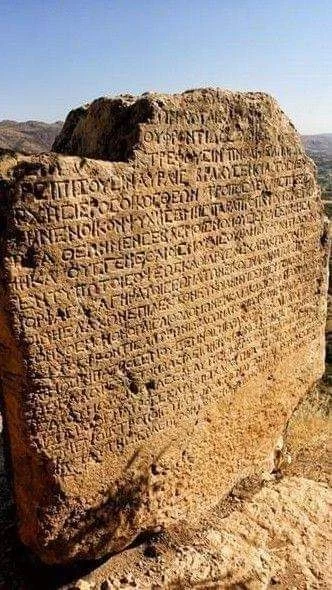
The sculptures, which bear witness to history, are made of limestone blocks and sculpted by blending Hellenistic, Persian art and original art of the Commagene country. Portable artifacts found on the mountain were taken to the Adiyaman Museum and are now displayed there. Artifacts that cannot be moved are still preserved in the National park located on Mount Nemrut.